Hervey Bay's Coral Reefs part of the Great Barrier Reef Lagoon

Updated: Jan 20

Have you ever walked along the beaches of Hervey Bay and noticed coral washed up along the shore? For years, these reefs have gone unnoticed, with people picking up pieces of coral on the beach without realising that just 50 metres away lie 6,500-year-old coral reefs along the foreshore. When you pick up the coral, you might instantly think it has travelled a great distance from the Great Barrier Reef, not knowing that Hervey Bay is part of the Great Barrier Reef lagoon and that a hidden wonderland lies in plain sight.

Fascinating Marine Ecosystems:
Coral reefs are among the most complex and fascinating marine ecosystems in the ocean. They are the largest biological structures on the planet, formed over thousands of years. With nearly a quarter of all marine fish relying on healthy coral reefs, it is easy to see why they are often referred to as the “rainforests of the sea.”
The reefs of Hervey Bay are the southernmost known reef-building coral reefs on Australia’s east coast mainland. While they have received less attention from the public and scientific communities than the Great Barrier Reef or Moreton Bay, they have been identified as hosting rare and unusual coral species that are more diverse and better developed than those found further south, off the Sunshine Coast and in Moreton Bay.

Maria Zann Scientist:
Respected local marine spatial ecologist Maria Zann explains the ecological significance of Hervey Bay’s coral reefs in her 2011 research, Mapping Coral Communities of Hervey Bay and the Great Sandy Strait and Implications for Coastal Planning Policy:
“The Hervey Bay chain of reefs is regionally significant because it connects to the most important seagrass beds and mangrove habitats of the southern GBR lagoon, including those of the Hervey Bay Dugong Protection Area and the Great Sandy Strait Ramsar Area (an internationally important wetland). The reefs provide habitat for roving fish, fauna, and key herbivores such as the endangered green turtles.”Zann explains.

Vulnerable Habitat:
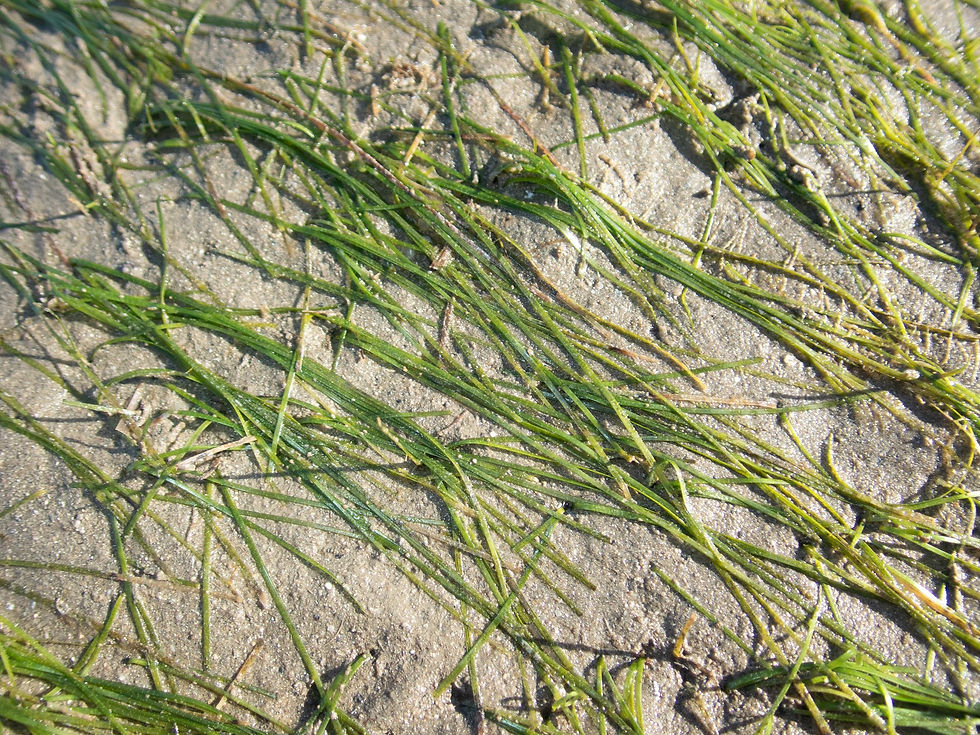
Hervey Bay foreshore and the Great Sandy Strait Ramsar area, along with the Great Sandy Biosphere, highlight the significance of these waters as optimal habitat and feeding grounds for local endangered green sea turtles (IUCN) and vulnerable dugongs as they move between these areas.
Still recovering from the effects of the flooding events of 2011, 2013, and 2021–2022, the recent re-emergence of seagrass meadows off Shelley Beach—which may not yet be reflected in updated wetland mapping—has brought large numbers of foraging green sea turtles extremely close to shore. This remarkable sight is enjoyed by many locals and visitors, who often paddle board or kayak over the seagrass meadows and connecting reefs.
Mainland fringing reefs are rare on the Great Barrier Reef (GBR), and the existence of Hervey Bay’s reefs in such marginal conditions, and in close proximity to a regional urban centre, is highly significant in terms of both human use and ecosystem values. However, their close proximity to the shore renders them especially vulnerable to stress, lowering their resilience to climate change and human stressors. Due to their location south of the Great Barrier Reef, the values of Hervey Bay’s fringing reefs have, for the most part, been poorly understood (Bennett 2004).
Ian Butler Scientist:
Marine ecologist and fisheries scientist Ian Butler, who has conducted research on many of the reefs in Hervey Bay—including exploring the palaeoecological history of four reefs dated at 6,500 years old—made the following comment on the significance of Hervey Bay’s fringing reefs as a highly accessible, unique local marine asset and a potential future coral refuge under climate change:
“You may not realise it, but Hervey Bay’s coral reefs are quite unique. I can think of nowhere else in Australia where you can have a coffee in a city and then, minutes later, casually wade into the ocean among beautiful coral reefs. The same is true for much of the world, actually—urban areas tend to cause the death of coral reefs,” Butler explains.
Prof. Ian Butler’s findings show that coral reefs have existed for over 500 million years, with most shallow-water reefs forming between 5,000 and 10,000 years ago, some deep-sea reefs growing for up to 40,000 years, and research from Hervey Bay revealing long histories of sea-level change, major storm events, and a significant marine disturbance approximately 3,000 years ago.
Human Impacts
"It has been identified that if human impacts, such as land management practices and run-off, are kept to a minimum, marginal high-latitude reefs such as those in Hervey Bay will be of high conservation value as natural laboratories, due to their responses to extreme stresses and their potential to facilitate connectivity and coral polyp gene flow across the seascape."Butler explains.

Ian Butler also highlighted this point in his research, stating:
“There is potential for the reefs of Hervey Bay to act as a high-latitude refuge in the future.The southern GBR has been identified as an area with perhaps the greatest potential as a long-term refuge for coral under future climate change (van Hooidonk. 2013),” and Hervey Bay lies just south of the park boundary. Butler explains.

Prof Andrew Olds Scientist:
To further illustrate the importance and significance of the unique fringing reefs of Hervey Bay, Professor Andrew Olds, an animal ecologist who has recently conducted research on the coral reefs of the region, has commented as follows:
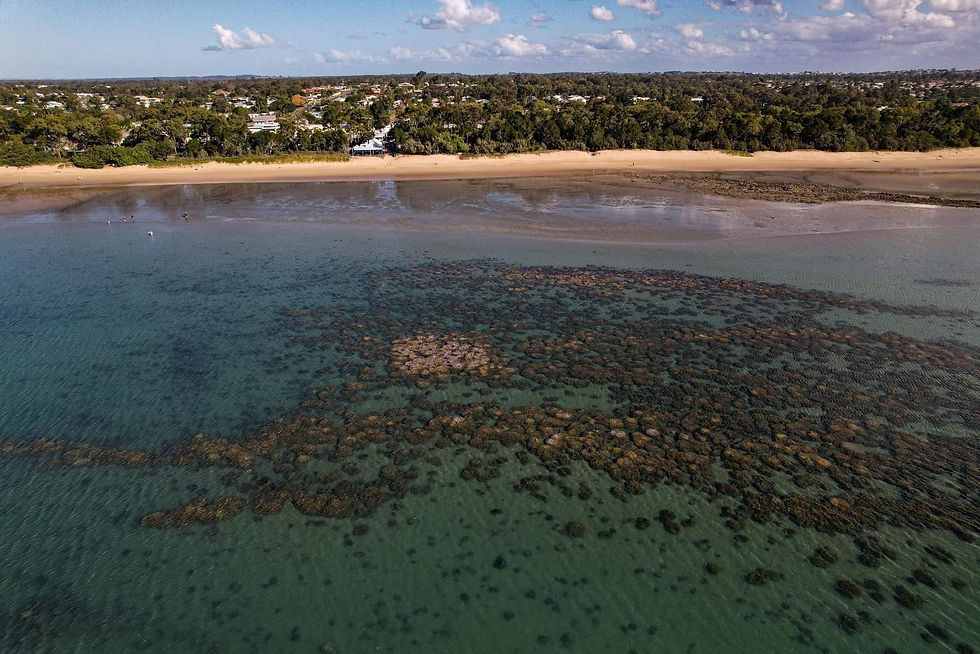
“Hard coral cover on Torquay Reef increased between 2019 and 2023. This is the only reef in Hervey Bay where coral cover has increased over the five years during which my team has monitored reefs in this region,” says Prof. Andrew Olds.
The Hervey Bay region is a natural transitional zone where tropical, subtropical, and temperate species coexist within reef communities covering an area of approximately 15 km². This includes intertidal reefs (4 km²), shallow subtidal corals (6.3 km²), and deeper reef gardens (4.7 km²) (Zann 2011; WetlandInfo 2018; Department of Environment and Science 2023).
Due to this mixing of species pools, along with regional hydrodynamic and climatic conditions and the region’s location along the southern edge of the Great Barrier Reef, Hervey Bay is considered a potential refuge for tropical species migrating south in response to climate change (Wallace et al. 2009; Beger et al. 2014; Sommer et al. 2014; Mizerek et al. 2016).
Coral species dominance (i.e. the degree to which individual coral taxa dominate coral cover on individual reefs) is high, and individual reefs are characterised by corals from different genera and by taxa with distinct growth forms (Zann 2011; Loder et al. 2012; Butler et al. 2013). This results in high spatial variation in biodiversity, morphological features, and structural properties, which in turn shapes the value of these reefs as habitat for a diversity of iconic and threatened mobile species (Zann et al. 2012; Martin et al. 2015, 2018).
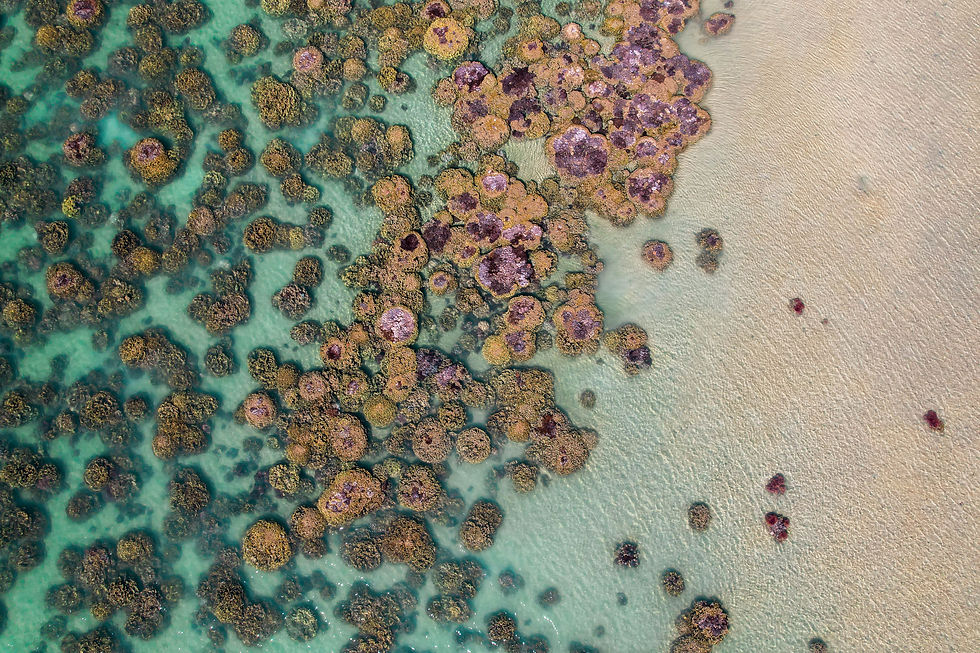
Forty-six species of hard coral have been recorded on coral reefs in the Hervey Bay region, with approximately half of these listed as either Vulnerable (8 species) or Near Threatened (15 species) on the IUCN Red List of Threatened Species (DeVantier 2010; Zann et al. 2012; IUCN 2023).
The coral reefs of Hervey Bay provide critical habitat for at least four vertebrate species listed as threatened in Australia: White’s seahorse (Hippocampus whitei), and the loggerhead (Caretta caretta), green (Chelonia mydas), and hawksbill (Eretmochelys imbricata) turtles (Short et al. 2019; Martin et al. 2015; Olds et al. 2023). Turtles use coral reefs in the region as resting and foraging habitats, as well as sheltering sites during long-distance migrations to nesting beaches (Martin et al. 2015; Department of Environment and Science 2023).
The endangered White’s seahorse inhabits reefs and sponge gardens in coastal bays and estuaries of southern Queensland and central New South Wales (between Hervey Bay and Nowra) and is declining due to the loss of inshore reef habitats (Harasti 2016; Short. 2019; Simpson. 2020).
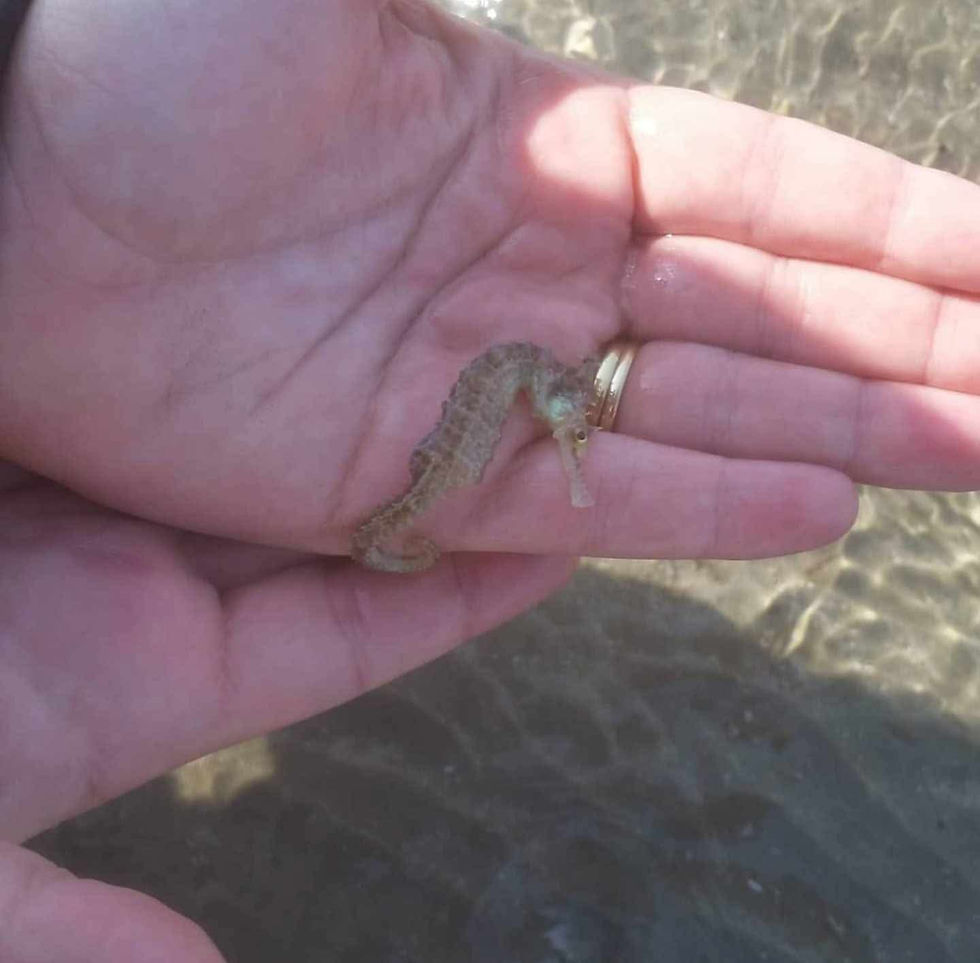
White’s seahorse has been recorded in Hervey Bay, but the potential role of reefs in this region as habitat for the species has not yet been examined. It is rare to see corals fringing the mainland coastlines of bays and sheltered shorelines as they do in Hervey Bay, because inshore conditions along the Queensland coast are either not conducive to reef accretion or have been negatively affected by declining water quality since European settlement (Lybolt et al. 2010; Berkelmans et al. 2012; Thompson. 2023).

Fight the height of a 18 storey building directly in front of the Torquay Coral Reef and protect Hervey Bay's Coral reefs! Donate today!- https://chuffed.org/project/support-the-appeal-against-18-storey-hervey-bay-hotel
Thank you for reading our fifth blog! Subscribe, like and comment to stay updated and catch our future posts!! This blog was written by Breannah and Sharon Mitchell credited the scientists mentioned in this article. Stay tuned to next article regarding light pollution and coastal development.


Comments